What Happens After a Customer Approves a Repair
Follow an approved repair through Request Pick, Parts Requests, staging, technician completion, and the final invoice.
The customer approved the headlight repair. Now the work has to get back to the people who will do it.
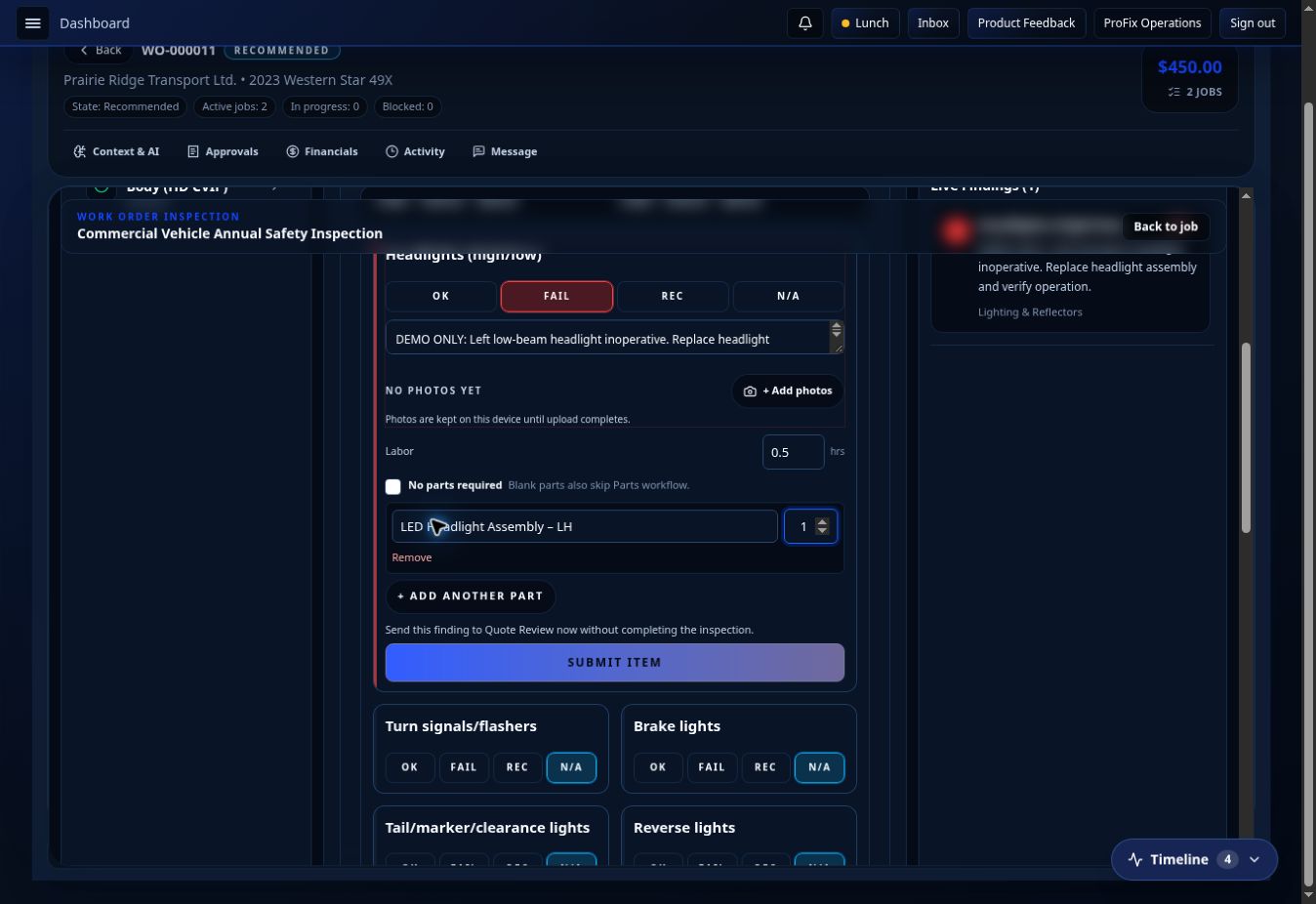
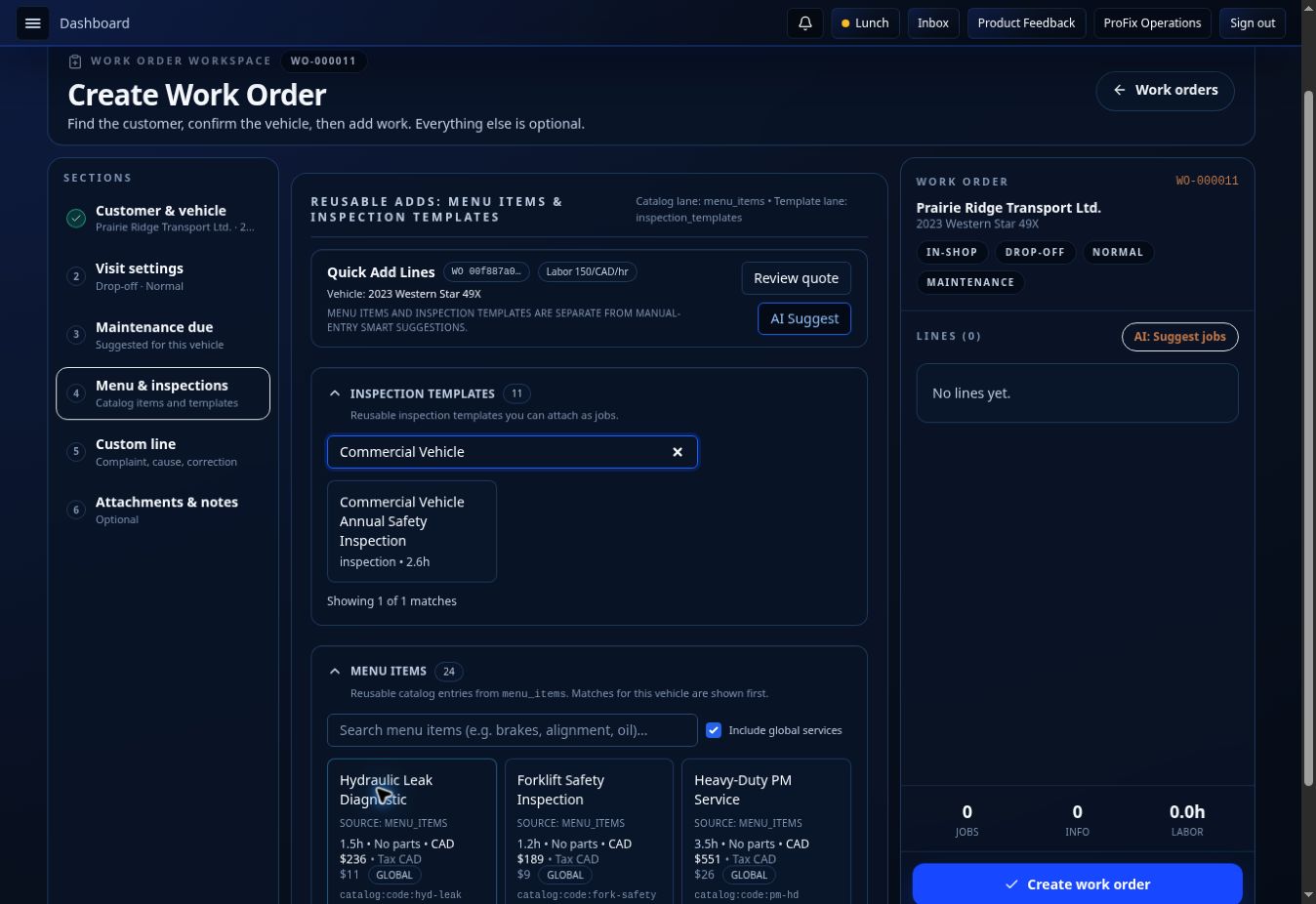
In our ProFixIQ Shop walkthrough, that meant a specific handoff. The approved repair was on the work order, the part had been quoted, and the advisor used Request Pick. The task appeared in Parts Requests with the work order, vehicle, and required headlight assembly attached.
Parts gets a task, not a message to interpret
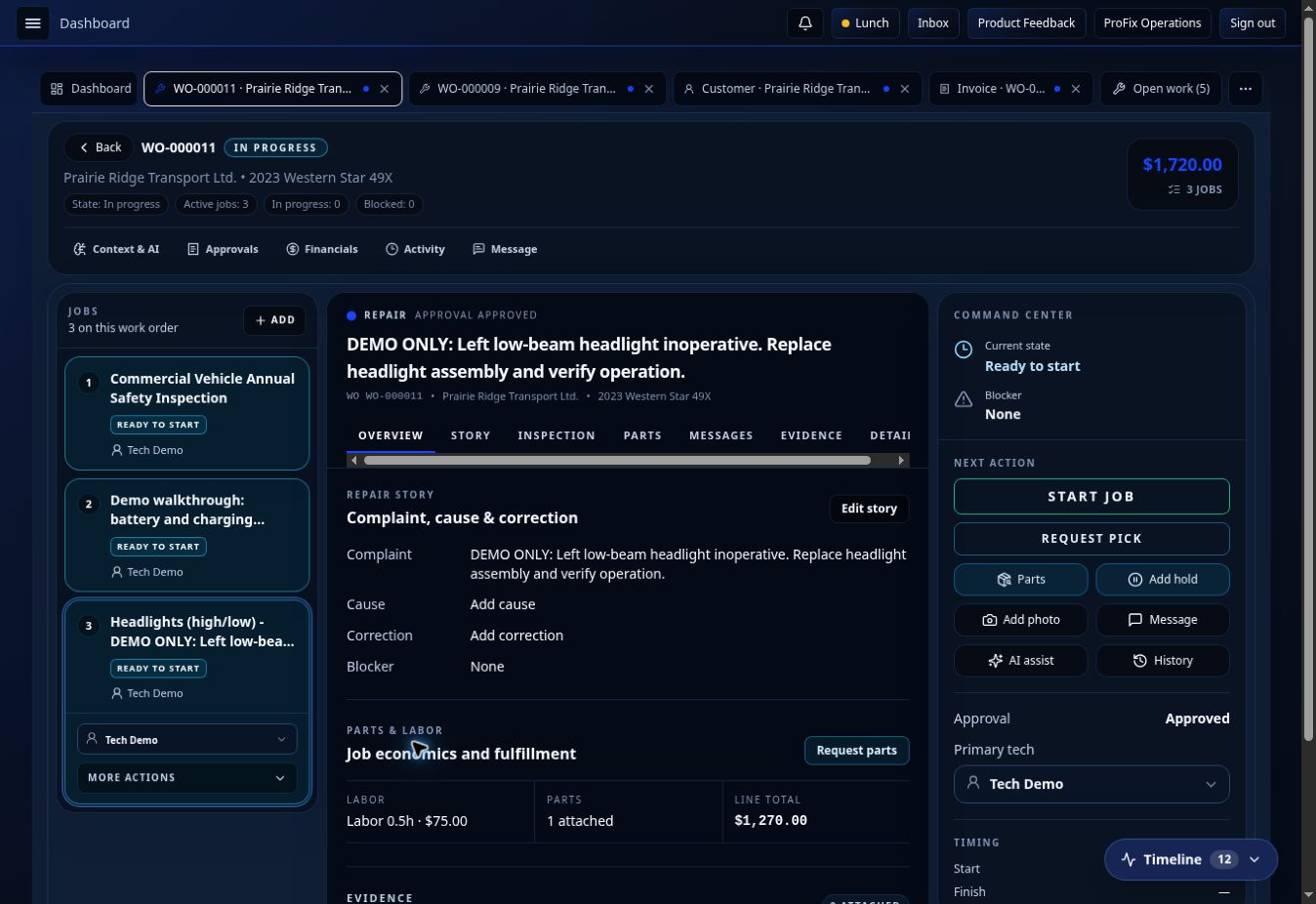
The parts view showed one assembly required and one available in main stock. Parts picked it and staged it for the job. The request then showed the staged quantity, so the shop could see what had actually been prepared.
This is the kind of small handoff that eats time when it depends on somebody remembering to call across the shop. The repair and the part request are connected to the same work order. Parts can act on the approved requirement without recreating the job.
The customer had also declined an optional work-light upgrade and deferred a preventive hood-pivot recommendation. Those decisions stayed on the quote. They were not treated as authorized repair work in this walkthrough.
The technician finishes from the job
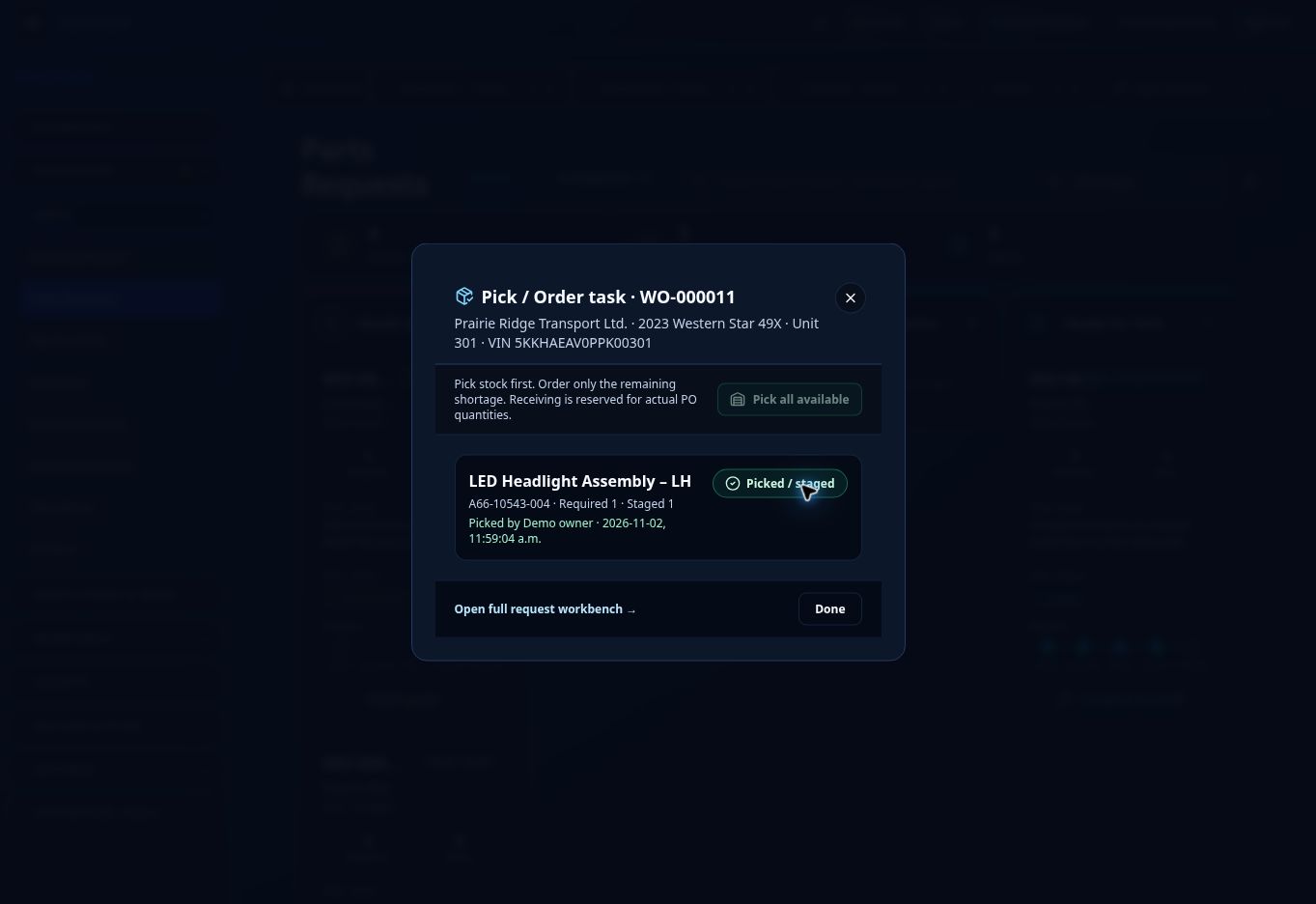
Once the part was ready, the technician worked from the assigned job. The work order kept the complaint, the approved repair, parts, and labor together. The technician recorded the cause and correction, completed the job, and signed it using the signature from the technician profile.
That completion matters beyond a green status badge. The advisor can review the work order and carry the completed work through to the invoice without rebuilding the repair from separate notes.
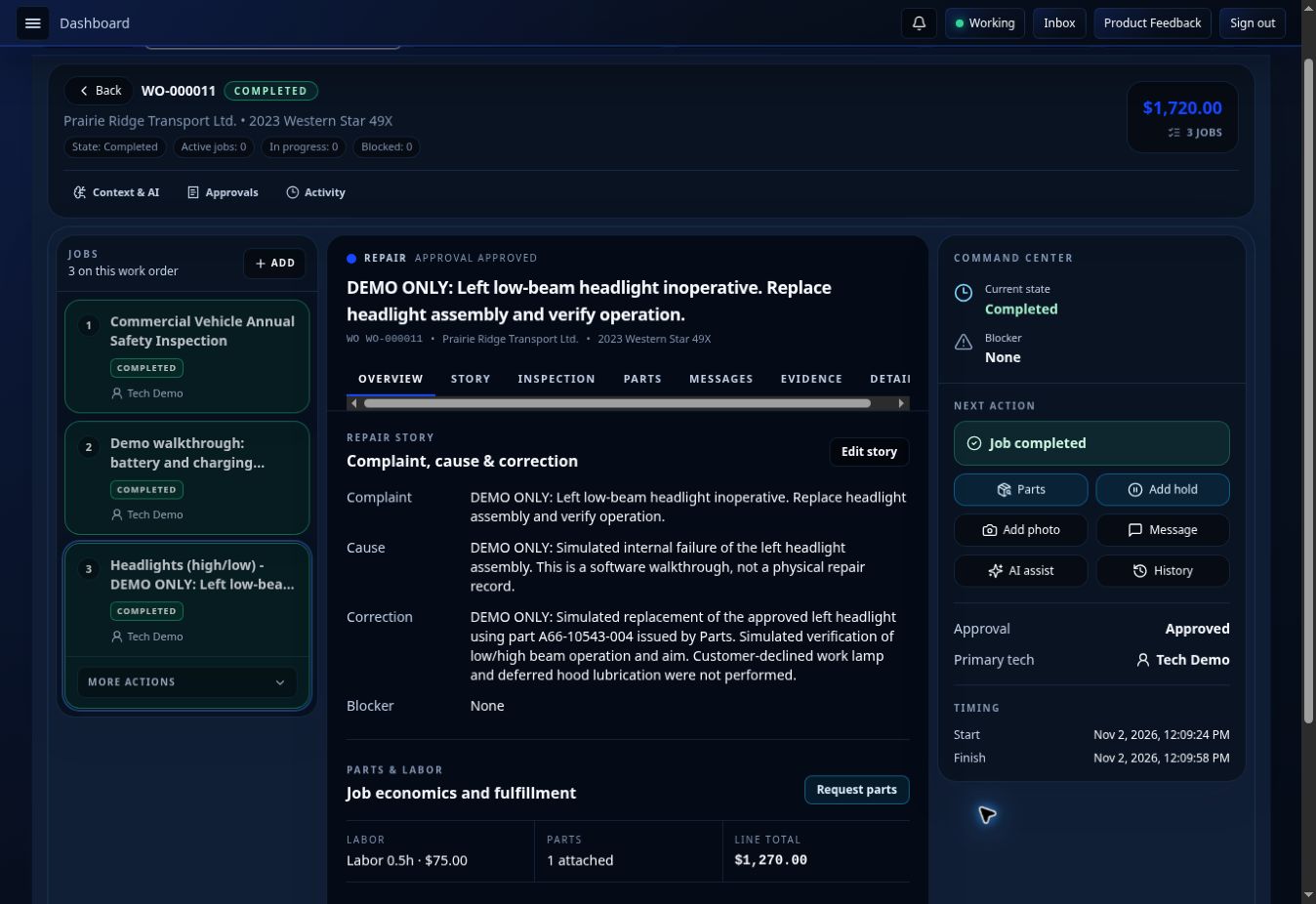
One record through the finish
The demo ended with the jobs completed and an invoice issued. The customer decision, parts pick, repair story, and billing record all belonged to the same job. That is the flow I want a shop to see: fewer manual relays between the advisor, parts counter, technician, and customer.
This was a software walkthrough using demo records and illustrative prices. No physical repair was performed.